Every year, our quality team reviews dozens of failed shipments that never made it past customs — not because the headphones sounded bad, but because the paperwork was wrong RoHS test report 1. A missing FCC ID 2, an expired RoHS test report, or a supplier’s CE Declaration of Conformity 3 that no lab can verify. These are problems that cost importers thousands and destroy launch timelines.
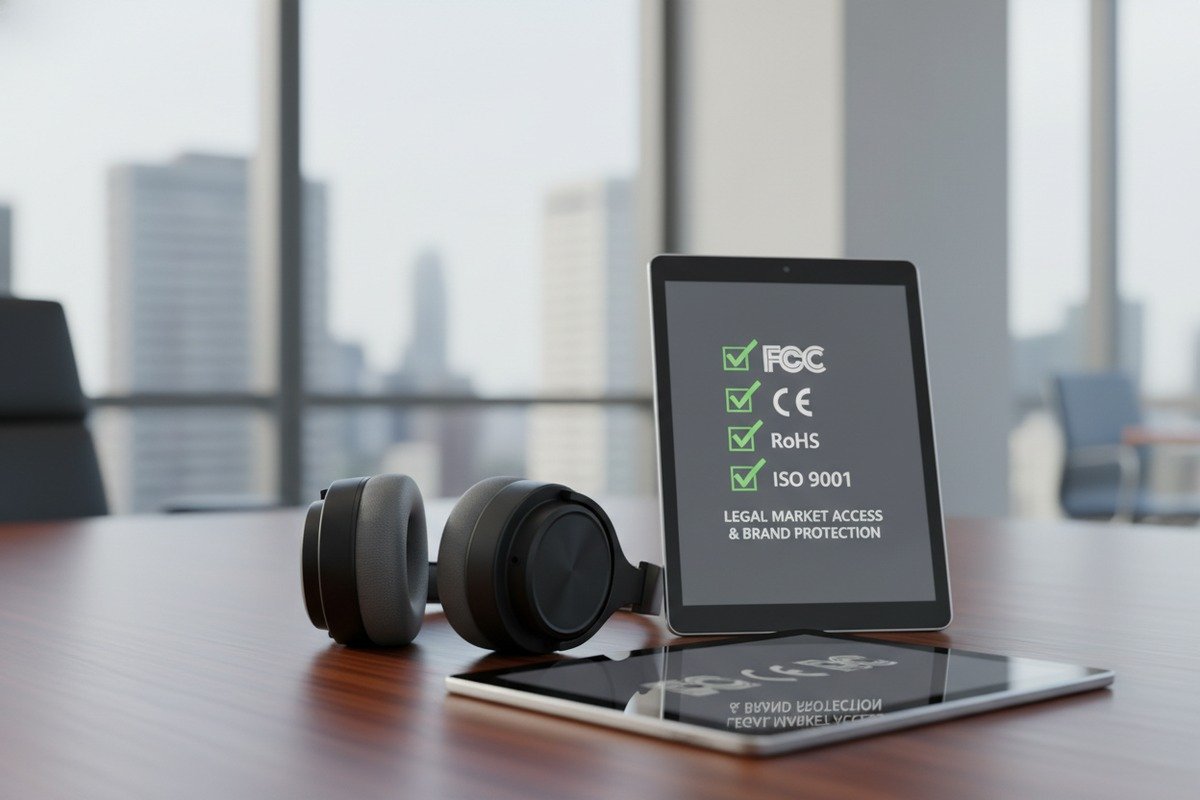
When sourcing headphone suppliers, prioritize FCC certification for the US market, CE marking with RED compliance for the EU, RoHS for global material safety, Bluetooth BQB for wireless models, and ISO 9001 for consistent quality management. These five certifications form the foundation for legal market access, reduced returns, and long-term brand protection.
The certification landscape for headphones — especially Bluetooth ANC models — has gotten more complex in 2025 BSCI and Sedex audits 4. Let’s break down exactly what you need, why it matters, and how to verify it before you place your next order.
How do I verify if a supplier's ISO 9001 certification will actually reduce my product return rates?
When we first implemented ISO 9001 5 across our Dongguan production lines, the immediate impact was not on paper — it showed up in our defect tracking logs within six months. Many buyers ask us for the certificate but never dig deeper into what it actually controls.
To verify if a supplier's ISO 9001 certification genuinely reduces returns, request their internal audit reports, corrective action logs, and process control documentation. A real ISO 9001 system tracks defects at every stage — from incoming materials to final assembly — and forces measurable corrective actions that directly lower field failure rates.
What ISO 9001 Actually Controls in Headphone Manufacturing
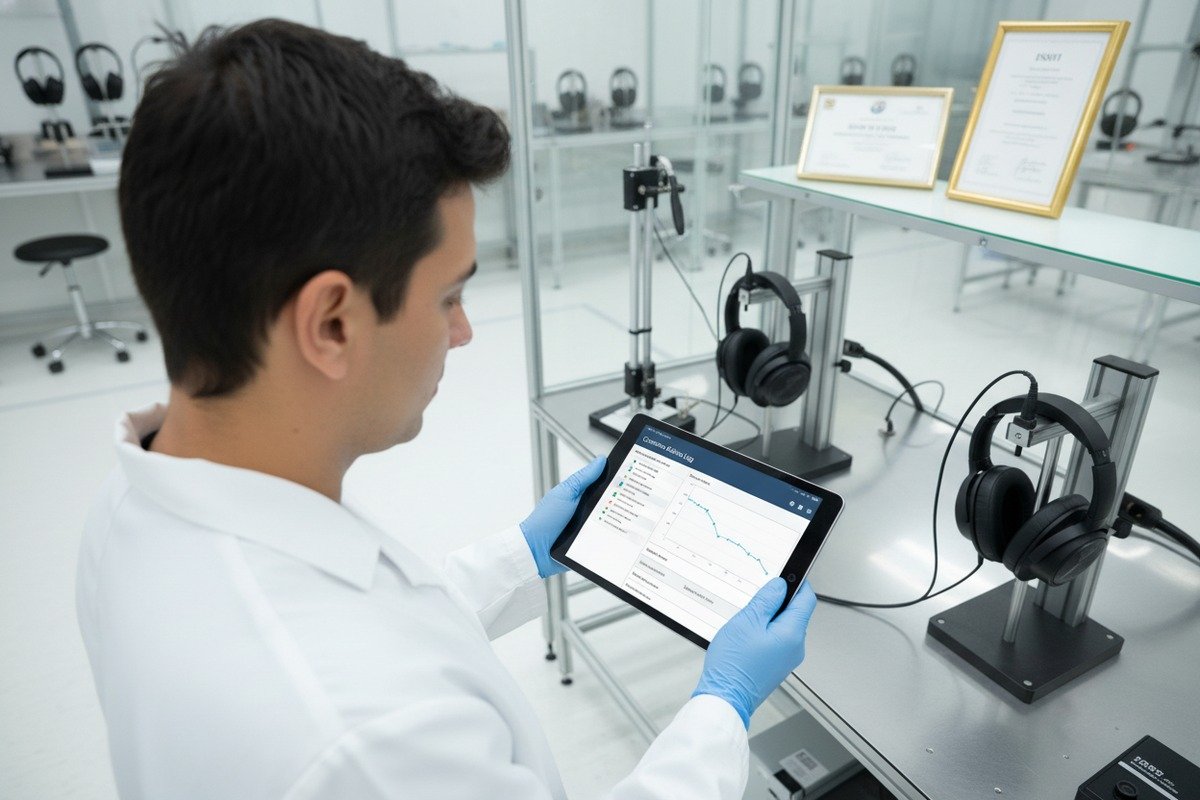
ISO 9001 is not a product certification. It certifies a management system. This means the supplier has documented processes for design control 6, supplier evaluation, production monitoring, and customer complaint handling. For headphone manufacturing, this translates into specific checkpoints.
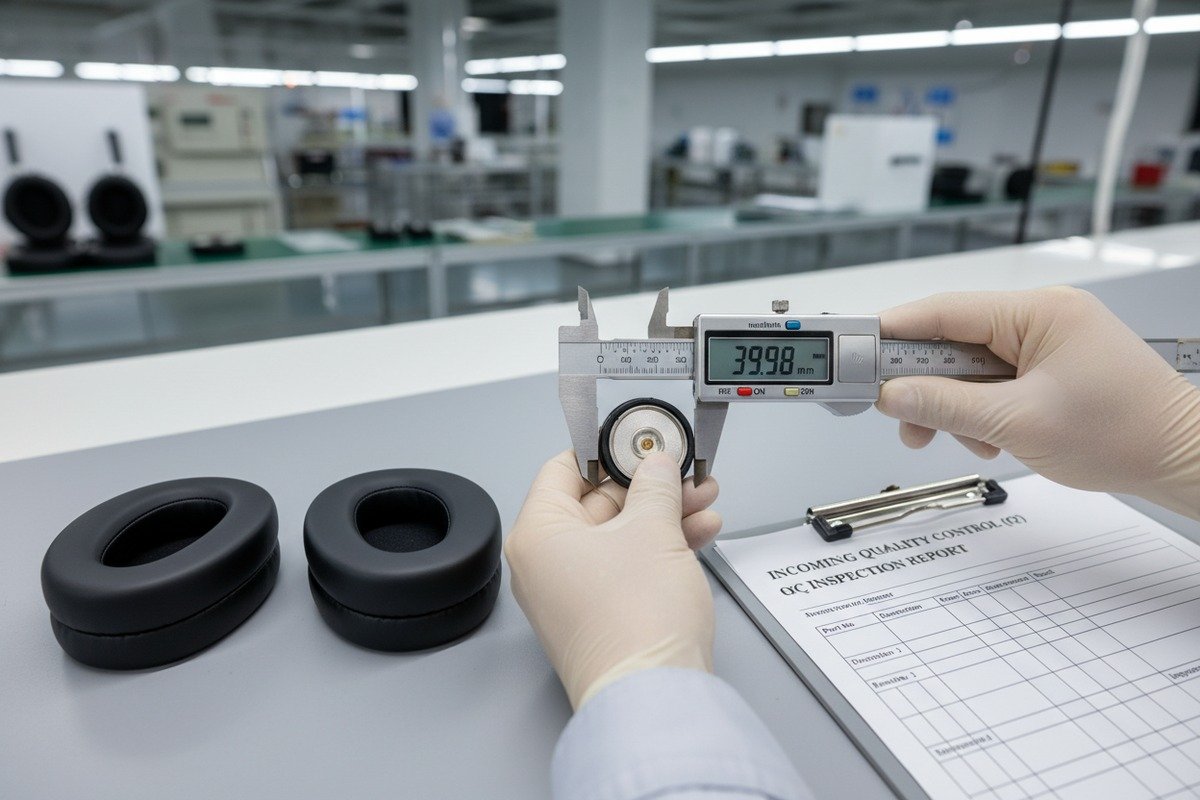
At our facilities, ISO 9001 requires us to maintain incoming quality control 7 (IQC) records for every batch of drivers, cushion foam, and headband materials. If a batch of 40mm drivers fails frequency response testing, the system forces a supplier corrective action request (SCAR). Without ISO 9001, that same batch might ship into production unnoticed.
How to Verify Beyond the Certificate
A certificate hanging on a wall means nothing if the system behind it is hollow. Here is what to ask for:
| Verification Step | What to Request | Red Flag If Missing |
|---|---|---|
| Certificate validity | Check expiration date and issuing body (e.g., SGS, TÜV, Bureau Veritas) | Expired or issued by unknown registrar |
| Scope of certification | Confirm it covers headphone/audio product manufacturing specifically | Scope only covers "general electronics" or unrelated products |
| Internal audit records | Request last 2 audit summaries with findings | Supplier refuses or has no records |
| Corrective action log | Ask for CAPA (Corrective and Preventive Action) examples | No documented corrective actions in 12+ months |
| Management review minutes | Evidence of regular leadership review of quality data | No management involvement in quality system |
The Real Impact on Return Rates
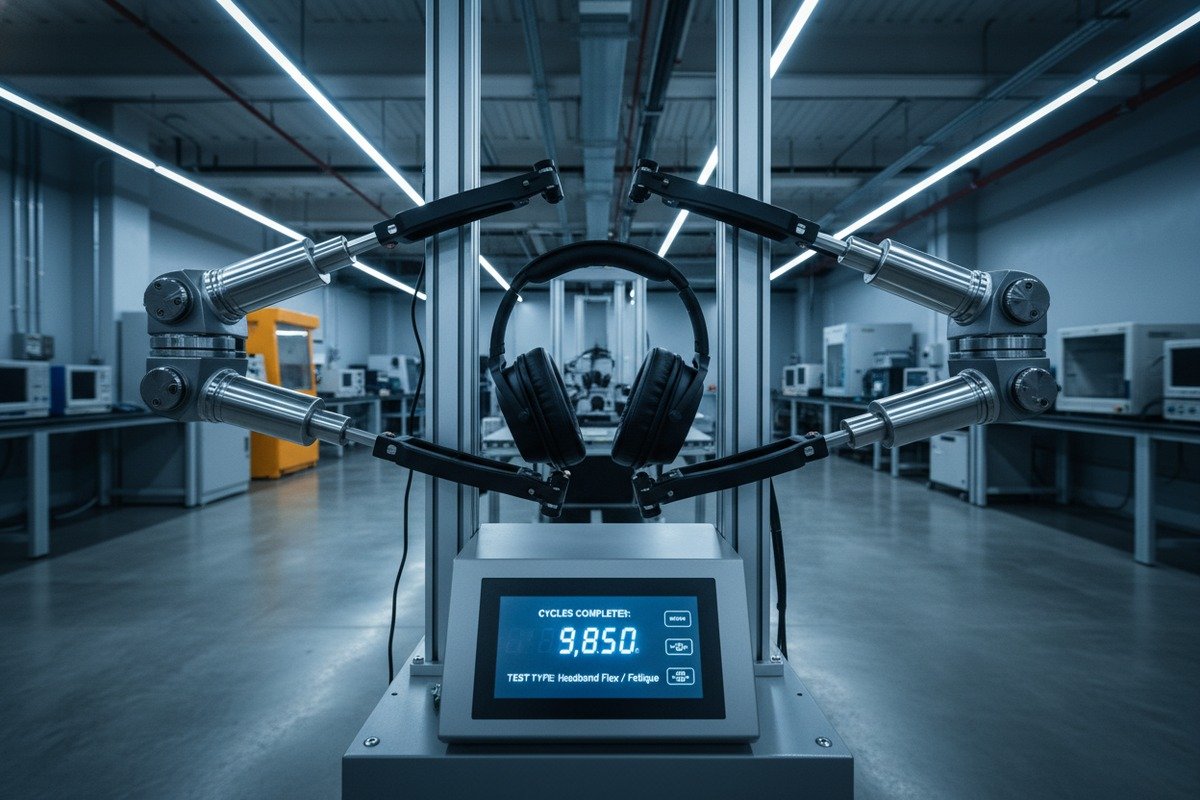
Our experience exporting to US and European distributors shows a clear pattern. Before we tightened our ISO 9001 processes around headband durability testing, our return rate on one product line sat around 4.2%. After implementing a specific life-cycle fatigue test — 10,000 open-close cycles — as part of our ISO-required design validation, returns on that model dropped to 1.1% within two quarters.
However, ISO 9001 alone does not guarantee low returns. A supplier can hold the certificate and still ship poor products if the system is poorly maintained. This is why you must audit the living system, not just the paper. Ask for their quality KPIs: first-pass yield, customer complaint rate, and out-of-box failure rate. If they cannot provide these numbers, the ISO 9001 certificate is decorative.
ISO 9001 vs. Other Quality Certifications
Some buyers also encounter ISO 14001 8 (environmental management), QC080000 (hazardous substance process management), and SA8000 (social accountability). These serve different purposes. ISO 9001 is the only one directly tied to product quality consistency. QC080000 complements RoHS compliance by ensuring hazardous substance controls are embedded in the manufacturing process — something we maintain alongside ISO 9001 at our production sites.
Which safety and environmental certifications like CE, FCC, and RoHS are essential for my target markets?
Our engineering team spends significant time each year updating test configurations for FCC and CE — because the rules keep changing, and getting it wrong means your shipment sits in a warehouse instead of reaching store shelves.
For US sales, FCC certification is mandatory for all wireless headphones under Part 15C. For EU markets, CE marking covering the RED directive, LVD, and RoHS is required. RoHS compliance is effectively global. Missing any of these certifications can result in customs seizure, fines up to €100K in the EU, and forced product recalls.
FCC Certification for the United States
Every Bluetooth headphone sold in the US must carry an FCC ID. This falls under Part 15C for intentional radiators. The process requires testing at an NVLAP or ISO 17025 accredited lab, and a Telecommunication Certification Body (TCB) must sign off. Self-certification is not allowed for Bluetooth devices.
The typical cost runs $5,000–$10,000 per model, with a 3–5 week turnaround. Wired headphones fall under Part 15B (unintentional radiators) and can use a Supplier's Declaration of Conformity (SDoC), which is simpler and cheaper.
Buyers should always verify the supplier's FCC ID in the FCC database (apps.fcc.gov/oetcf/eas/reports/GenericSearch.cfm). If the ID does not appear or belongs to a different product, walk away.
CE Marking for the European Union
CE marking for wireless headphones now falls under the Radio Equipment Directive 9 (RED) 2014/53/EU, which covers RF performance, electromagnetic compatibility (EMC), and electrical safety. Since 2025, EU customs authorities have become stricter — they increasingly demand full lab reports from recognized bodies like SGS, TÜV, or Intertek, not just a Declaration of Conformity (DoC).
The CE bundle typically costs $3,000–$8,000 and covers RED, Low Voltage Directive (LVD), and RoHS testing.
RoHS and REACH Compliance
RoHS restricts hazardous substances 10 — lead, mercury, cadmium, hexavalent chromium, PBBs, and PBDEs — in electronic products. The limits are strict: less than 0.1% for most substances, 0.01% for cadmium. This applies globally, not just in the EU.
Here is the critical problem: roughly 90% of Chinese suppliers test raw materials for RoHS, but fewer than 50% conduct full-product testing. Material-level RoHS testing does not catch contamination introduced during soldering, plating, or assembly. We run full-product XRF screening on finished units because material certificates alone are insufficient.
REACH adds chemical restrictions beyond RoHS, covering substances like phthalates in cable insulation and certain flame retardants in ear cushion foam.
Regional Certification Requirements at a Glance
| Certification | Region | Scope | Mandatory for Wireless? | Typical Cost |
|---|---|---|---|---|
| FCC (Part 15C) | United States | RF emissions, EMC | Yes — requires FCC ID | $5K–$10K |
| CE (RED + LVD) | European Union | RF, EMC, safety | Yes — requires DoC + lab reports | $3K–$8K |
| UKCA | United Kingdom | Same scope as CE | Yes — post-Brexit requirement | $2K–$5K |
| RoHS | Global (EU-origin) | Hazardous substances | Yes | $500–$2K |
| REACH | European Union | Chemical restrictions | Strongly recommended | $1K–$3K |
| PSE/TELEC | Japan | Safety/RF | Yes for Japan market | $3K–$7K |
| KC | South Korea | EMC, safety, RF | Yes for Korean market | $3K–$6K |
What Happens When You Skip Certifications
Non-compliant wireless headphone shipments face a 15–25% seizure rate at EU and US ports. In 2024, a mid-size US importer had 8,000 units of Bluetooth earbuds held at Los Angeles customs because the FCC ID on the product did not match the FCC database entry. The supplier had used an FCC ID from a different, older model. The importer lost the entire holiday sales window and absorbed $120,000 in losses.
The lesson: verify every certification yourself. Do not rely on the supplier's word. Check databases, request original lab reports with report numbers, and confirm the testing lab's accreditation.
Why should I look for BSCI or Sedex audits when evaluating a headphone manufacturer's social responsibility?
When we went through our first Sedex SMETA audit at our Dongguan facility, it forced us to re-examine everything from overtime policies to dormitory fire safety — areas that directly affect workforce stability and, ultimately, production quality.
BSCI and Sedex audits verify that a headphone manufacturer meets international labor, health, safety, and environmental standards. For buyers selling to major retailers or EU distributors, these audits are often mandatory procurement requirements. They reduce supply chain risk, protect your brand from negative press, and ensure ethical sourcing throughout your product's origin story.
BSCI vs. Sedex: What Each Covers
Both BSCI (Business Social Compliance Initiative) and Sedex (Supplier Ethical Data Exchange) evaluate factory social conditions, but they work differently.
BSCI is an audit program run by the Foreign Trade Association (FTA), primarily used by European retailers. It grades factories on a scale from A (excellent) to E (unacceptable) across 13 performance areas including fair wages, working hours, occupational health, and environmental protection.
Sedex is a membership platform where suppliers share audit data (typically via SMETA — Sedex Members Ethical Trade Audit) with multiple buyers. It covers four pillars: labor standards, health and safety, environment, and business ethics.
| Aspect | BSCI | Sedex (SMETA) |
|---|---|---|
| Governance | FTA (European) | Sedex (UK-based) |
| Audit type | BSCI audit with grading (A–E) | SMETA 2-pillar or 4-pillar audit |
| Data sharing | BSCI platform | Sedex platform |
| Common in | EU retail supply chains | Global, especially UK retailers |
| Cost to supplier | $2K–$5K per audit | $2K–$6K per audit |
| Validity | 2 years (A/B rating); 1 year (C/D) | Typically 1–3 years |
| Relation to SA8000 | Aligned but separate | Complementary |
Why Retailers Demand These Audits
Major retailers like Walmart, Target, and Carrefour require social compliance audits from their suppliers. If you are a headphone brand supplying these channels, your manufacturer needs to pass. No audit report, no purchase order.
But beyond retailer requirements, there is a practical quality argument. Factories with poor labor conditions experience higher worker turnover. High turnover means less experienced operators on the production line. Less experienced operators mean more assembly defects — misaligned drivers, poorly seated ear cushions, inconsistent soldering. We have seen this pattern repeatedly across the industry.
SA8000: The Deeper Standard
SA8000, based on International Labour Organization (ILO) conventions, goes further than BSCI or Sedex. It is a certifiable standard — meaning an accredited body issues a certificate, not just an audit report. It covers child labor prevention, forced labor, health and safety, freedom of association, discrimination, disciplinary practices, working hours, and compensation.
Our group maintains SA8000 certification across facilities because several of our long-term European partners require it as a condition of their corporate social responsibility (CSR) programs. For buyers targeting the European market or working with enterprise customers, SA8000 adds a layer of credibility that BSCI or Sedex alone may not provide.
The Brand Protection Angle
In 2025, consumer awareness of ethical manufacturing is higher than ever. A single investigative report about poor factory conditions can damage a headphone brand overnight. Social compliance audits are not just about checking a box — they are insurance against reputational risk. When your marketing says "responsibly made," you need audit documentation to back it up.
How does my supplier's BQB certification protect my brand from legal issues in the Bluetooth market?
Our R&D team learned the importance of BQB certification the hard way when a European distributor rejected a pre-production sample — not for sound quality, but because the Bluetooth stack had not been properly qualified through the Bluetooth SIG process.
BQB (Bluetooth Qualification Body) certification, managed by the Bluetooth Special Interest Group (SIG), is legally required for any product using Bluetooth technology. Without it, your brand cannot legally use the Bluetooth® word mark or logo, and the SIG can issue cease-and-desist orders, impose fines, and force product recalls — exposing your business to significant legal and financial liability.

What BQB Certification Actually Means
BQB certification verifies that a Bluetooth product meets the technical specifications defined by the Bluetooth SIG. This includes protocol conformance, interoperability with other Bluetooth devices, and proper use of the Bluetooth trademark.
There are different listing types depending on your product's design:
- End Product Listing: Required if you are building a complete Bluetooth headphone from scratch.
- Subsystem Listing: Applies if you use a pre-qualified Bluetooth module but add custom software or hardware.
- Component Listing: For the Bluetooth module or chipset itself, typically done by the chipset vendor (e.g., Qualcomm, Airoha, BES).
Many OEM headphone manufacturers — including our team — use pre-qualified Bluetooth modules. This significantly reduces the cost and time for end-product BQB listing. But it does not eliminate the requirement. You still need to complete a Declaration ID (D-ID) listing with the Bluetooth SIG.
The Legal Risk of Skipping BQB
The Bluetooth SIG actively enforces its trademark and technology licensing. If your product uses Bluetooth without proper qualification:
- The SIG can issue a cease-and-desist, forcing you to stop sales.
- Retailers and distributors can reject or de-list your product.
- Competitors can report your non-compliance to the SIG.
- You cannot legally print the Bluetooth® logo on packaging or marketing materials.
In practice, this means your headphones could be pulled from Amazon, Best Buy, or any major retail platform. For brands investing in marketing and channel relationships, this is a catastrophic risk.
Cost and Timeline
BQB listing costs vary based on the qualification path:
| BQB Listing Type | Typical Cost | Timeline | When Required |
|---|---|---|---|
| End Product (new design) | $8,000–$15,000 | 4–8 weeks | Custom Bluetooth implementation |
| Subsystem (pre-qualified module, custom integration) | $2,000–$5,000 | 2–4 weeks | Modified firmware or antenna design |
| End Product (using fully pre-qualified module) | $500–$2,000 | 1–2 weeks | Standard module, no modifications |
When we develop new ANC headphone models for our OEM clients, we typically use pre-qualified Bluetooth modules from major chipset vendors. This allows us to complete the BQB end-product listing for under $2,000 and within two weeks. For buyers working with suppliers who design custom Bluetooth implementations, costs will be significantly higher.
How to Verify Your Supplier's BQB Status
Go to the Bluetooth SIG's Launch Studio (launchstudio.bluetooth.com) and search for the supplier's company name or the product's Declaration ID. Every legitimately qualified product appears in this database. If the supplier cannot provide a valid D-ID or if the search returns no results, the product is not qualified.
Also check whether the Bluetooth SIG membership is current. SIG membership must be active for the listing to remain valid. Lapsed memberships can invalidate existing product qualifications.
BQB and FCC: They Are Not the Same
A common mistake among first-time importers is assuming that FCC certification covers Bluetooth compliance. It does not. FCC tests RF emissions and electromagnetic compatibility. BQB tests Bluetooth protocol conformance and trademark usage rights. You need both. Neither replaces the other.
Conclusion
Certifications are not optional paperwork — they are the foundation of legal market access, quality assurance, and brand protection. Prioritize FCC, CE, RoHS, BQB, and ISO 9001. Verify everything independently. Your supply chain's integrity depends on it.
Footnotes
1. Details the documentation needed to demonstrate compliance with hazardous substance restrictions. ↩︎
2. Explains the unique identifier assigned by the FCC for electronic devices. ↩︎
3. Defines the manufacturer’s self-declaration of product compliance with EU directives. ↩︎
4. Explains social compliance audits for ethical sourcing and supply chain responsibility. ↩︎
5. Explains the international standard for quality management systems. ↩︎
6. Describes the systematic process to ensure product design meets user needs and requirements. ↩︎
7. Explains the inspection process for materials and components before production. ↩︎
8. Explains the international standard for environmental management systems. ↩︎
9. Describes the EU directive regulating radio equipment for market placement. ↩︎
10. Explains the restricted materials in electronics due to environmental and health risks. ↩︎
发表回复